There was a time—before algorithms, pop-ups, and corporations selling your private data—when advertising lived peacefully inside comic books, wedged between superheroes and dubious moral lessons. These ads promised you could become wildly popular, inhale the newest sugary snack trash, or become the proud owner of a sea-monkey empire, all for a money order and handwritten order form. Welcome back to Ad Nauseam, where I dust off those gloriously unhinged relics of commerce, revisiting an era when marketing was earnest, unregulated, and clearly written by someone who had never met a child. Think of it as time travel—except instead of fixing the past, we’re laughing at it. Which, honestly, is more achievable.
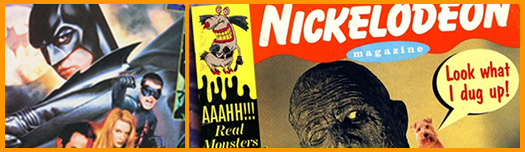
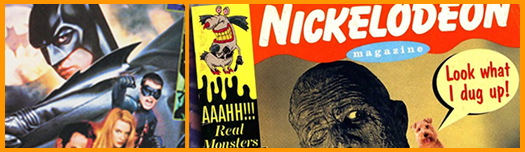
Tonight’s relic: Nickelodeon Magazine #15 released October 1995
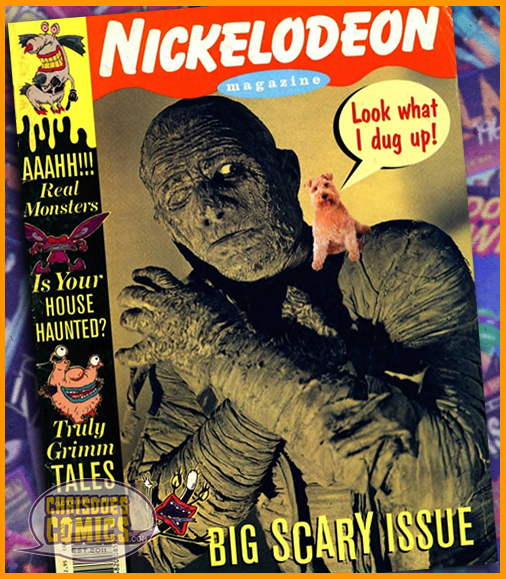
Nickelodeon Magazine was a slimy Rosetta Stone of ’90s kid culture—a paper portal where jokes were obnoxious, rules were optional, and adults were the punchline. Launched in the early ’90s as the print sidekick to the legendary Nickelodeon kids television network , it mashed together comics, fake ads, prankish “facts,” celebrity interviews, and reader chaos with the confidence of a kid who thought recess would last forever. It didn’t teach you things so much as dare you to laugh while accidentally learning them, all wrapped in neon colored irreverence. When it finally shut its pages in the late ’00s, it left behind a legacy of gloriously unserious journalism—and a generation still convinced that magazines should be funny, weird, and a little bit gross.
If you had the luxury of watching Nickelodeon even just a little, I bet this iconic commercial for the magazine is ingrained into the fibers of your brain.
Personally, I never had the chance to browse these magazines at the time I was the demographic…but I came across some issues in an antique store (just typing that threw my back out) and upon flipping through them I was hit in waves about the possibilities I missed out on. Not a great feeling. But, hey, my dumb-internet-site exists for things just like this! And, with me being me, I choose to crack open this tomb of consumerism with its Halloween issue. So grab a bowl of candy corn, put on some Hey Arnold! Inspired jazz, and lets head back to late ‘95 to explore the tomb of Nickelodeon Magazine #15!
Nickelodeon magazine, please!
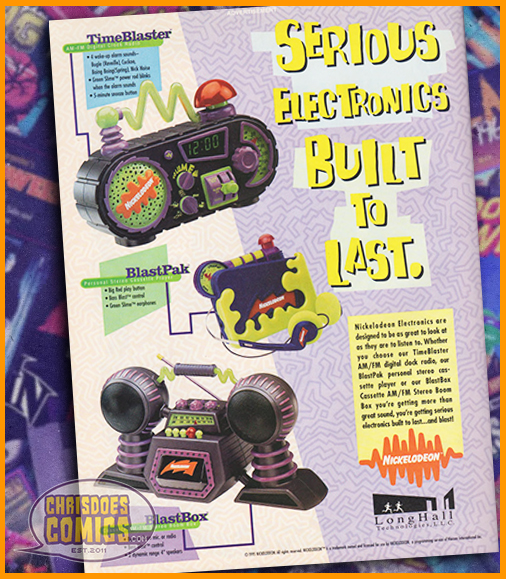
Nickelodeon Electronics
I first want to say the Timeblaster alarm clock from this ad could very well be the mascot for the entire 1990s decade. Unapologetic, silly, bold, and colorful. I don’t remember seeing any of these electronics anywhere to my knowledge. But, somehow, we were all aware. Nickelodeon was such a force in children’s entertainment that they themselves were the draw. Not the show or characters. The network logo said it all: I watch good shit.
This ad looks like it was designed during a Double Dare physical challenge and approved by a committee of kids yelling “MORE BUTTONS.” Everything is neon, nothing is subtle, and each gadget—the TimeBlaster, BlastPak, and BlastBox—appears to exist solely to beep, blink, and lend itself perfectly to your “mad scientist” bedroom aesthetic. The ad promises serious electronics built to last, which in Nickelodeon language means “will survive being dropped down the stairs while making laser noises.” It’s the kind of ad that doesn’t explain what the electronics actually do so much as dare you not to want them, presenting technology as a lifestyle defined by goo motifs, zig-zag antennas, and an unwavering belief that the future would be loud and goopy.
Historically, this ad is peak mid-90’s Nickelodeon aestheic, when advertising stopped pretending to be educational and leaned fully into scribbly neon chaos. Nickelodeon didn’t just allow ads like this—it actively encouraged them to look unhinged, matching the magazine’s anti-adult, pro-weird sensibility. These products blurred the line between toy and tech at a time when kids wanted gadgets but weren’t trusted with anything that had a real plug. The result is a glorious artifact of an era when “electronics” meant chunky plastic, and fake readouts. Like a device stolen from a laboratory that produced neon signage and Pop Rocks.
Nickelodeon needed electronics because they had pure unadulterated power. I’d own one of these right now to set on my boring nightstand. A piece of childhood practically screaming through the monetary of adulthood. A statement saying “I used to run on green slime.” or something like that.
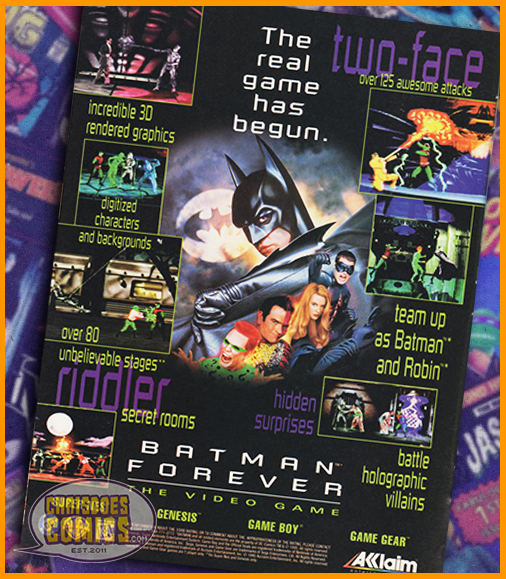
Batman Forever: The Video Game
I still stand by Batman Forever. I enjoyed it in 1995. And I enjoy it today. Yes, it was disappointing to realize Michael Keaton and Tim Burton wouldn’t return to continue Batman’s big screen adventures…but the addition of Robin and Jim Carrey as The Riddler immediately peaked my interest. So when another “Summer of Batman” returned, I was all in as usual. Which meant another video game adaption.
The 1989 Batman NES game is still one of my favorites. And the Batman Returns beat ‘em up for the SNES was great fun. Batman Forever was bold, flashy, and kitchy. Should make for a great game! Digitized characters? 3D graphics? Play as Batman and Robin?
What can go wrong? Everything, old chum. Everything.
The Batman Forever video game managed to misunderstand both Batman and fun at the exact same time, which is honestly an impressive feat. The game looked flashy and “advanced” at first glance but played like “Mortal Kombat underwater”. And I can only describe my opinion of playing it being that I’d hold my head underwater instead of playing this bat-trash.
What truly doomed the game, though, was its commitment to maximum inconvenience. Levels dragged on forever, enemies respawned with the enthusiasm of unpaid Riddler-goon-interns, and progress was constantly blocked by puzzles that felt less “detective work” and more “game designer holding you hostage.” Instead of a brooding atmosphere, you got fluorescent mazes; instead of justice, you got repeated game overs and a creeping sense that Batman would absolutely quit his own game. In the end, Batman Forever didn’t make you feel like The Dark Knight—it made you feel like someone who rented the wrong game for the weekend and had to pretend you were still having fun because it had the bat symbol slapped on it. Fool me once, Batsy.
I didn’t touch a Batman game until 2001’s Batman Vengeance.
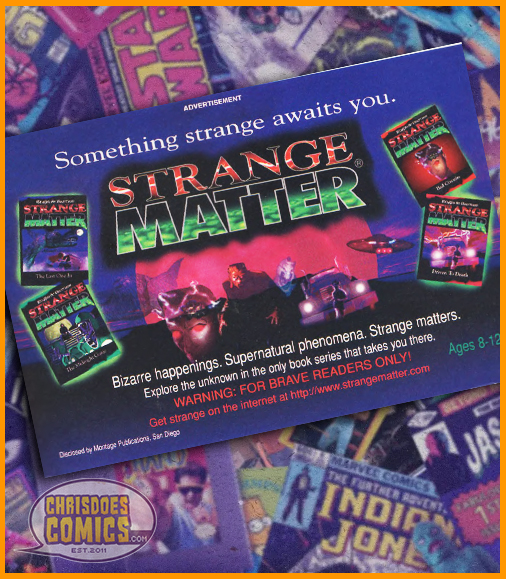
Strange MatterBook Series
The Strange Matter series emerged in the mid-1990s with one clear mission: scare preteens just enough to make bedtime awkward, but not enough to alert parents. Marketed as a spooky alternative to Goosebumps, Strange Matter went harder on body horror, mad science, and cryptids, all while maintaining the comforting assurance that everything would be wrapped up in about 120 pages. The books specialized in “what-ifs” of supernatural encounters—so your teacher’s a werewolf, you have a ticket to an undead football game, the abominable snowman is walking to my house—and delivered them with the subtlety of a t-shirt cannon to the jaw.
Historically, Strange Matter is largely forgotten. A footnote of “copycats” that tried to bank in on the dripping slime of PG Horror that was marketed so heavily to children. With just a little over 2 years of being published, it never achieved the brand dominance of Goosebumps or Fear Street, yet it cultivated a loyal audience of kids who liked their horror meaner, messier, and less humorous. Its legacy lives on in the collective memory of millennials who can’t fully explain why they’re unsettled by school laboratories, dentists, or unexplained bodily changes—but suspect a thin paperback with a lurid cover might be responsible. In hindsight, Strange Matter didn’t just scare kids; it gently prepared them for adulthood, where things also get weird, painful, and rarely explained by a trustworthy authority figure.
And, in all honesty, the little independence Strange Matter had has probably fused with the memories of R.L. Stine’s tales in the time since. Creating a new genre of Mandela Effect that involves classmates that turn out to be ghosts or your neighbor being an alien.
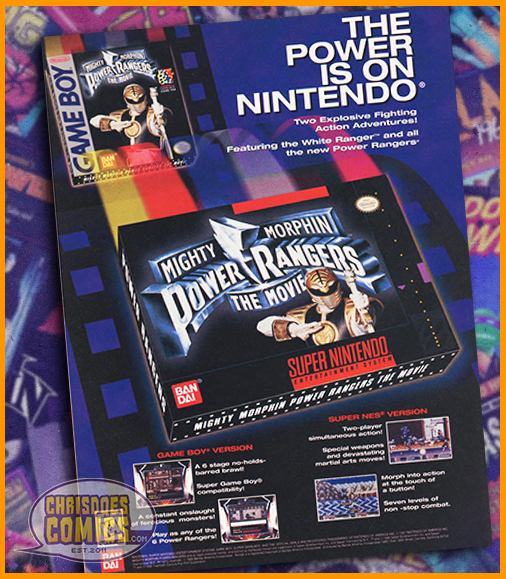
Mighty Morphin’ Power Rangers: The Movie: The Game
Mighty Morphin Power Rangers is a show where five impeccably polite teenagers are repeatedly pulled out of extracurricular activities to fight rubber-suited monsters on behalf of a floating head in a tube. They solve most problems by posing, color-coding themselves, and summoning dinosaurs that turn into construction equipment. Part superhero saga and toy commercial dressed up in spandex with electric guitar riffs. A true force 1990s kid culture.
By 1995, Mighty Morphin Power Rangers weren’t just popular—it achieved the kind of cultural dominance usually reserved for weather events and historical empires. If you were a kid, you watched it; while you filled your living room filled with karate kicks to imaginary monsters. School playgrounds turned into unofficial Ranger training academies, where everyone wanted to be the Green Ranger, even though statistically that was never going to work out. It understood children perfectly: bright colors, loud noises, and a weekly lesson that teamwork matters—especially when given access to a self aware talking tiger dagger.
When Mighty Morphin Power Rangers: The Movie hit theaters in 1995, it felt less like a movie release and more like a federally sanctioned children’s event. The result was louder, shinier, and inexplicably set on a different planet, as if the filmmakers feared keeping it on Earth might make too much sense. It didn’t matter—the soundtrack was hotter than Kimberly, Ivan Ooze chewed scenery like purple bubble gum, and for one glorious summer, every child walked out believing they, too, might someday be chosen to fight bumbling evil monster mascots… provided they owned the action accessories.
The video games, while nothing mighty, were solid. I had rented their two video games on the Super Nintendo a number of times. I can only describe them as “Diet Streets of Rage” with some “Dollar Store Street Fighter” Megazord levels thrown in-between. But, as a diehard fan, they did the job and were passable games even till this day. I honestly can’t tell the different games apart, but I’d recommend giving them a play. They have about as much story and character growth as an actual Power Rangers episode.
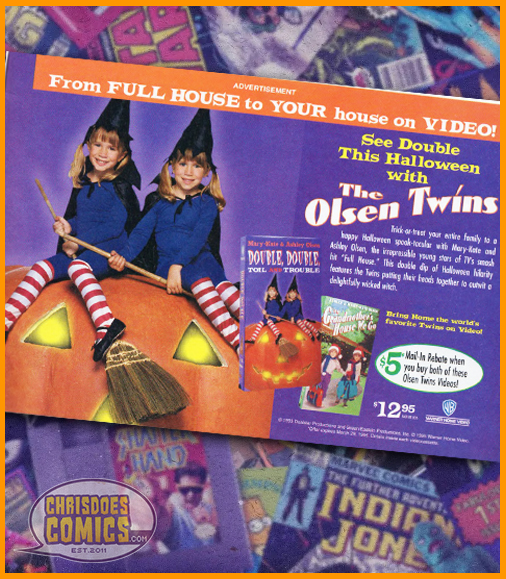
Olsen Twins Nightmare VHS
Spawning from the sugary “Full House” sitcom, Mary Kate and Ashley Olsen appeared everywhere at once, starring in movies that seemed to exist entirely on VHS and the collective trust of parents who thought “twins” automatically meant “wholesome.” Although the Olsen Twins were as charismatic as the cardboard their VHS tapes were packaged in and couldn’t act their way out of a pair of violet overalls…they had a grip on girls nationwide.
You didn’t choose to know who the Olsen twins were; society assigned them to you, and by 1995 they had become less like child actors and more like a brand you absorbed through cultural osmosis, whether you wanted to or not.
1993’s Double, Double Toil and Trouble…inexplicably advertised for consumption 2 years later because if you’re six years old and it’s October, your standards are legally suspended. I had no sisters growing up, so I was never subjected to the Olsen twins form of “entertainment”…but life has a funny way of hurting you. My wife grew up enjoying the Olsen Twins and this particular movie is one of her cozy nostalgic movies to watch for the Halloween season. I’ve fallen asleep every time (whoops!) but managed to get through the whole thing last year.
Here’s a rundown of the plot: The Olsen twins’ parents are on the verge of losing their house, so they turn to their wealthy Aunt for help. The Aunt refuses to support them but has a secret: she has her “good” twin trapped inside a magical mirror with the power of a MoOnStOoOnE. The only way to break this curse? Twin powers inexplicably!
On Halloween, The Olsen Twins devise a plan to break the curse, befriend a homeless man who overhears their plan, never questions the validity of it, and joins the adventure. They waltz into a satanic ritual to get hold of the MoOnStOoOnE. Using their unique twin abilities, the girls break the curse and free the good sister trapped in the mirror. And the good sister promises to help the twins with the money for their house.
End.
I’m all for nostalgic, corny, kitschy movies especially involving Halloween. But Double, Double Toil and Trouble is a stinker. The movie takes place in sunny green California with no effort to make it feel like fall or the Halloween season. The Olsen Twins are just soulless little props that walk from environment to environment and read “sassy” lines with the excitement of someone that received a lobotomy. Harmless? Sure. Wholesome? No shit. But it’s also slow and bland. There’s much better children’s Halloween movies out there. The only part I perked up at was briefly a trick or treater in the background was dressed as The Shredder.
After finishing this movie, it made me realize why the Olsen Twins grew into two chain smoking skeletons whose only respite is the shadows. Now that’s Halloween, baby.
Thumbing through this 30 year old issue of Nickelodeon magazine instilled me with that “FOMO” feeling, as the kids say these days. The fear of missing out. Something I’ve experienced a number of times while writing Ad Nauseams. To find something from your era that just speaks to you, even now, realizing what it could have done for you had you discovered it in childhood.
There was something quietly magical about Nickelodeon Magazine—not because it was flashy (it absolutely was), but because it trusted kids to be weird, smart, and in on the joke. It felt like a secret clubhouse in paper form, where curiosity mattered more than polish and humor didn’t talk down to you. In a world that constantly tried to teach children things, the magazine mostly just invited them to look closer, laugh harder, and question why adults took themselves so seriously. As a print extension of Nickelodeon’s worldview, it captured a fleeting moment when childhood felt expansive and uncynical—when creativity was loud, rules were bendable, and flipping a page could feel like tuning into a frequency made just for you. Long after the slime dried, that sense of playful permission is what lingers most.
Each Ad Nauseam entry feels a little like tempting fate—because no one needs this much reflection on decades-old advertisements, and yet here we are, together. If you’ve read one, a handful, or inexplicably all of them, I genuinely appreciate you. It takes a very specific, deeply respectable kind of person to willingly spend their time indulging the nostalgic ramblings of a grown adult emotionally activated by ads that once promised brain-rotting video games and teeth-rotting cereal.
Which tells me something important about you.
So thanks for pausing mid-panel, lingering between the staples of old comics, and taking a trip down these paper-scented memory lanes with me. ChrisDoesComics will always be open for overthinking childhood ephemera and finding comfort where none was intended. Coffee’s on me—purely hypothetical, but spiritually binding.


